Closing The Loop: Recovered Carbon Black As A
Localisation Lever For Indian Tyre Manufacturing
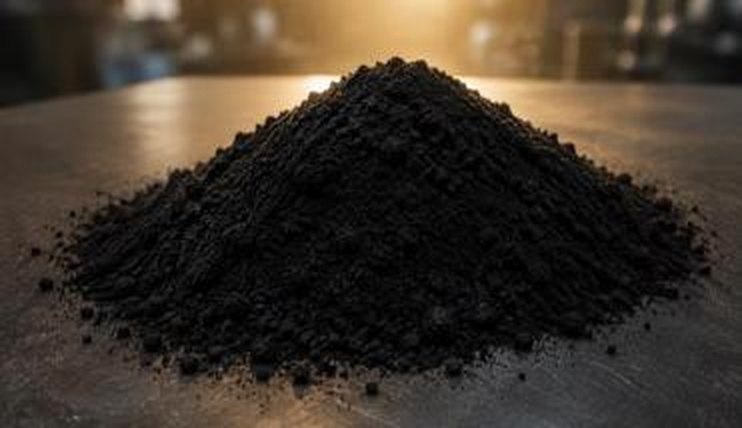
Discussions on localization of the tyre value chain are often centred on natural rubber. Comparatively less attention is given to reinforcing carbon black, despite its critical role in tyre manufacturing. Although India possesses significant domestic furnace-black production capacity and remains a net exporter overall, it continues to rely on imports for certain hard and specialty grades. In addition, furnace-black is produced using carbon black feedstock, a byproduct of crude oil refining. Thus, achieving a truly resilient and sustainable domestic supply chain requires not only local manufacturing capacity for carbon black, but also the localization of the underlying feedstock supply
Where does India’s recycled carbon go?
- 3 MMT of waste tyres were recycled in India in FY2024 of which 1.68 MMT was domestically generated
- Majority of the waste, 2.68 MMT, was recycled through pyrolysis yielding 0.80 MMT of carbon char
- 94% of carbon char used as pet coke substitute
- 6% of carbon char upgraded to rCB
Source: Enhancing Circular Economy of Waste Tyres in India, NITI Aayog, 2026
India has the feedstock but not the rCB processing capacity
The majority of carbon char generated today is used as a substitute for pet coke. While this appears to be a missed opportunity to upgrade readily available char, the reality is more complex. Recovered carbon black is not an extension of an existing pyrolysis operation. Its production requires two distinct capabilities: a pyrolysis process engineered and controlled to produce char to defined specifications, and a dedicated finishing facility for milling, classification, and pelletization. A plant focused on fuel oil production, where char is a secondary output, cannot become an rCB producer simply by adding milling capacity. Char sourced from the open market also carries the characteristics of the process through which it was produced, which is why suppliers serving tyre applications typically retain control over both stages of manufacturing. In India, the key constraint remains the limited availability of purpose-built capacity.

India’s constraint has never been the tyres. It is the capacity to turn what comes out of them into a material a tyre maker can actually use –and that capacity has to be built deliberately, from the reactor forward.” – Mrs. Reema Jain,
Director, Go Green Eternal
What the ecosystem needs next:
- BIS specifications for recovered carbon black and tyre pyrolysis oil
- Multi-year agreements between tyre manufacturers & recyclers covering feedstock continuity & product offtake
- Recognition of recovered fillers within green procurement and sustainable-tyre labelling frameworks
- An EPR framework that rewards upgrading recovered carbon into reinforcing material rather than diverting it to fuel
This article appears in the Bharat Mobility Global Expo 2027 Newsletter, Volume 3 — alongside leadership notes from ACMA and updates from across India’s mobility supply chain.
Reproduced in full from the Bharat Mobility Global Expo 2027 Newsletter, Volume 3, September 2026, published by EEPC India, with permission.